AI Doesn't Build Your Strategy
The real difference between using AI as a tool for strategic thinking and using it as a substitute for thinking that never happened with practical examples from the field.


Introduction
There are two types of executives who walk into a first consultation in the past two years. "We used ChatGPT and built our entire strategy." "We have not tried AI yet. Can it build our strategy for us?" Both are asking the wrong question. And both arrive carrying a document that looks like a strategy but collapses at the first real operational question. This article is not about what AI can do. It is about what it cannot do without you and about the difference between using it as a tool that multiplies your thinking, and using it as a substitute for thinking that never happened.
Content
What AI Is Actually Doing When You Ask It to 'Build Your Strategy' AI is very good at answering the question you ask. The problem is that you may be asking the wrong question and it will answer it with complete confidence. When you ask: "What is the right marketing strategy for my business?" it produces an answer. Coherent, formatted, professionally-looking. But it does not know: 1 What makes your specific client trust you and not any other service provider in the same space. 2 Why your last five prospects said no even though everything seemed technically correct on paper. 3 What actually differentiates you in your specific market and how your current clients describe your value in their own words.
AI does not research. It generates. It produces what looks correct based on patterns in its training data. But your strategy needs what is correct based on the reality of your specific market, your specific client, and your specific competitive environment. MCKINSEY 2024: Companies that deployed AI to produce strategic recommendations without a prior analytical framework performed below their historical baseline in more than 60% of cases. The tool was not the problem. The absence of strategic thinking to guide it was. "AI is a mirror, not a mind. It reflects what you put into it. If you input ambiguity, it outputs an answer that looks clear. That is precisely the danger."
Tool vs. Substitute: Two Practical Examples The difference is not in the tool you use. The difference is in who is doing the thinking. Here are two examples from actual consulting work with Arab businesses in Istanbul. ✗ The Wrong Substitution Scenario: An Arabic restaurant wanting to increase dinner reservations The manager opens ChatGPT and types: "Give me a marketing strategy for an Arabic restaurant in Istanbul to increase reservations." He receives a list of 10 points: Instagram Reels, influencer partnerships, a loyalty program, local SEO. All theoretically correct. All things competitors are also doing. Nothing answers the real question: why would a client choose his restaurant specifically over the five others on the same street? ✓ The Smart Use Same restaurant, different approach A consultant conducts 6 short interviews with current clients. He discovers that 5 of 6 mentioned "the quiet family atmosphere" as their primary reason for returning. He analyses this finding. Then he uses AI to craft marketing messages that specifically reflect this differentiator, generate content ideas that highlight this experience, and draft targeted ad copy. The difference: the consultant did the research. AI handled the production. Strategic thinking came from the human. Operational efficiency came from the tool. HARVARD BUSINESS REVIEW In a study of 758 consulting teams using AI in problem-solving tasks, the only statistically significant differentiator in output quality was the clarity of the framework the human provided to the tool not the tool itself.
Why AI Exposes Strategic Weakness Rather Than Concealing It Companies that rely entirely on AI to build their strategy find themselves in an uncomfortable position at the first meeting with a serious prospect or strategic partner. The document looks perfect. The points are organised. But when someone asks: "Why this specific choice and not the alternative?" there is no answer. Because there was no thinking. There was only generation. "AI produces internally consistent answers that can be entirely wrong in context. And the danger of internal consistency is that it gives those answers the appearance of certainty." Real strategic thinking produces opinions that can be defended. It produces decisions whose author can explain why this choice and not that one. AI cannot do this without you — because defending a decision requires understanding its context, and context is something the human lives, not something the tool generates. MIT SLOAN MANAGEMENT REVIEW Companies that used AI as an accelerator for thinking meaning after defining the framework and problem achieved a measurable competitive advantage in 73% of cases. Companies that used it as a substitute for thinking registered no advantage in 81% of cases.
Strategic Thinking as the Prerequisite for Any Intelligent AI Use Before opening any AI model to work on your strategy, you must be able to answer three questions with complete clarity: 1 Who exactly is your client, and what problem do you solve for them? Not the generic answer like "we serve small and medium businesses." 2 What makes your solution different from the alternatives your client can access? Beyond generic claims like "we offer high-quality service." 3 What evidence shows your clients see genuine value in your offer? Verifiable data, direct quotes, measurable indicators. If you cannot answer these three questions specifically, AI will answer them for you using patterns from markets that know nothing about your context. You will receive a strategy that looks correct and is wrong. The danger is not the failure itself. The danger is being convinced it is correct because it looks coherent. GARTNER 2024: By 2026, 30% of marketing strategies for small and medium businesses will be produced primarily via AI tools without sufficient human strategic guidance. Gartner projects this will create a wide trust gap between what businesses offer and what markets actually need.
QUESTIONS THIS POST ANSWERS 1- Can AI build a complete marketing strategy? It can produce a document that looks complete. But it will be built on general patterns rather than an understanding of your specific market context. An effective strategy requires diagnosing the right problem first and that requires a human who understands the context. 2- What is the difference between using AI as a tool and using it as a substitute for thinking? Smart use: you conduct the research and define the framework, then use AI to accelerate production. Wrong substitution: you give AI a general description and take its output directly as strategy. In the first, you think and the tool produces. In the second, no one is genuinely thinking. 3- How does AI expose strategic weakness rather than hiding it? Because it produces internally consistent answers built on your ambiguity. If you have not precisely defined who your client is, AI produces language that encompasses all clients and when it meets the real market, everything collapses.
4- What are the correct steps for using AI in building a marketing strategy? First: conduct interviews with current clients and analyse what you hear. Second: identify the real problem you solve and what differentiates you. Third: use AI to craft messages and accelerate production. The order matters: thinking first, tool second. 5- Why does AI strategic content appear convincing even when it may be wrong? Because large language models are trained to produce coherent and logical text. Internal consistency does not mean correctness in external context. An answer that is correct for a different market looks entirely correct until it meets the real market.
Let's Work together
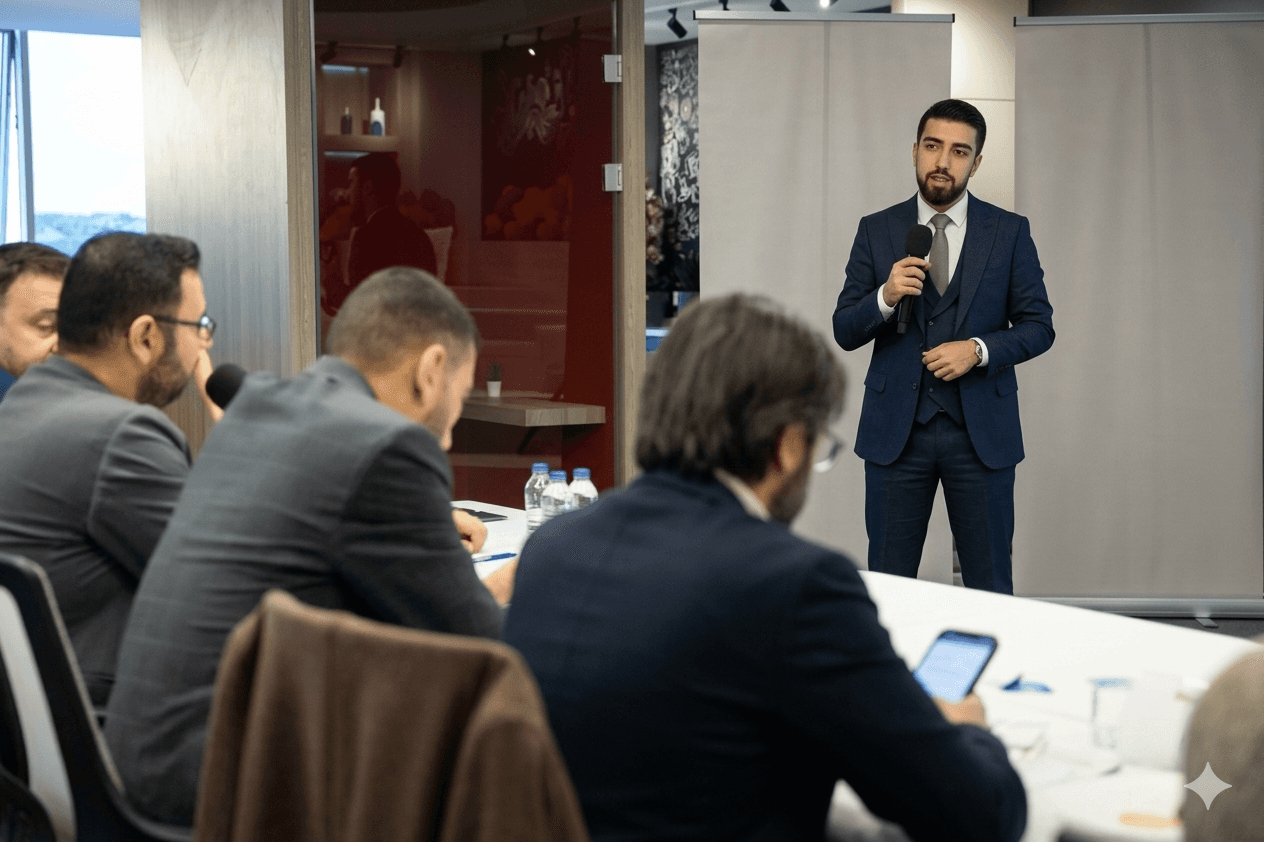
Dr. Ahmad Salaheddine, PhD in Marketing and Strategic Marketing Consultant, has over a decade of experience guiding NGOs, startups, and SMEs across five countries. Awarded Best Partner in the Middle East 2025, Ahmad helps organizations build marketing strategies that translate vision into measurable growth.
AI has not eliminated the value of strategic thinking. It has raised it. Because the gap between someone who directs it with clear thinking and someone who gives it vague questions has become larger, more visible, and faster to emerge than at any point before. A strategy built on real research, guided by clear thinking, then accelerated by AI that is the competitive advantage the tool cannot copy, because you are the one who produced it.