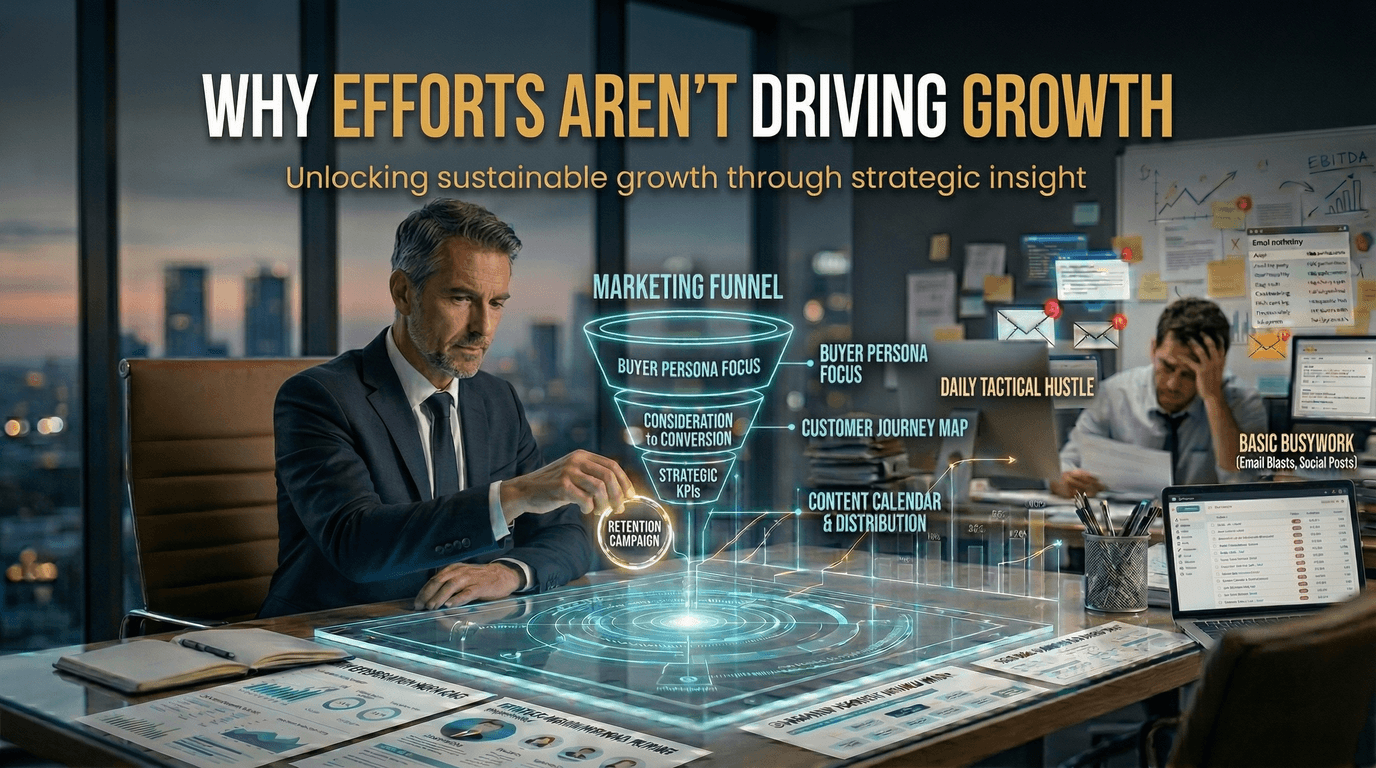
Why Efforts Aren’t Driving Growth
Most organizations don’t lack resources they lack strategy. There’s a difference between being busy with marketing and actually driving growth. One creates activity. The other creates results. Many organizations never learn to tell them apart until it’s too late.
Introduction
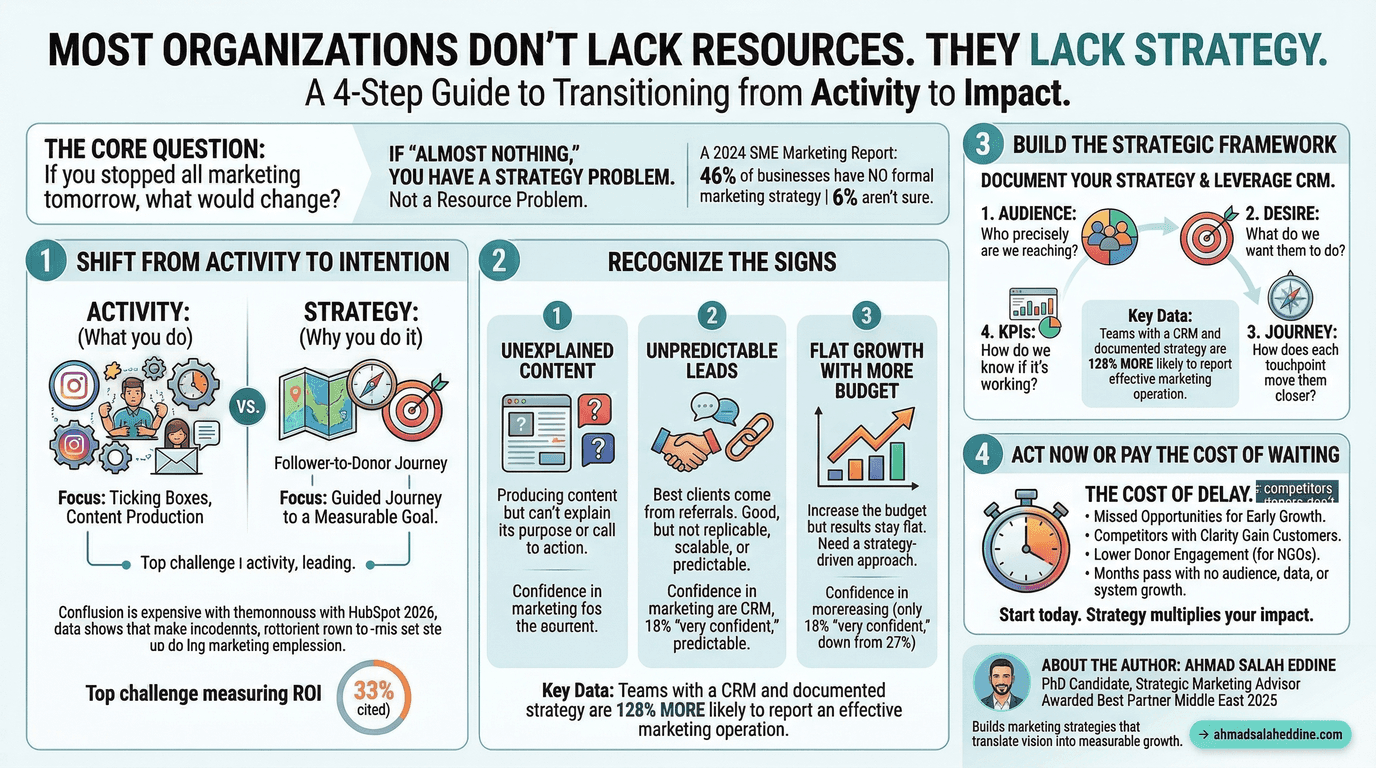
Ask yourself: If you stopped all your marketing tomorrow; every campaign, email, and initiative would your organization grow more slowly… or would almost nothing change? If the honest answer is “almost nothing would change,” the issue isn’t resources. It’s strategy. What Is Marketing Strategy (And Why It Matters)? Marketing strategy is a system that connects actions to measurable outcomes. It defines: 1- Who you are trying to reach 2- What you want them to do 3- How you guide them toward that action 4- How you measure success Without this system, marketing becomes disconnected activity effort without direction.
Content
Why Marketing Activity Doesn’t Drive Growth? Many organizations mistake movement for progress. They send emails, run campaigns, and launch initiatives but none of it connects to a clear outcome. According to the SME Marketing Report 2024 46% of organizations have no formal marketing strategy, and 6% aren’t even sure if they do. Two-thirds cannot explain how marketing contributes to their goals. Many organizations are running without a map. The result? 👉 Activity increases 👉 Effort increases 👉 But growth stays flat According to HubSpot’s State of Marketing Report 33% of marketers cite measuring ROI as their biggest challenge often because activities are not tied to clear strategic outcomes. Because activity without strategy cannot compound.
The Difference Between Activity and Strategy Marketing activity often appears as isolated actions, such as sending generic emails or hosting one-off initiatives. A strategic approach transforms these actions into systems that drive results. Instead of sending generic emails, it builds structured sequences that guide first-time customers toward repeat engagement. Instead of one-off initiatives, it creates targeted interactions based on customer behavior and preferences, increasing long-term retention and loyalty.
3 Signs Your Marketing Lacks Strategy 1. You Create Content, But It Doesn’t Lead Anywhere Your efforts generate visibility, but no clear next step. There’s no defined action tied to your communication. 2. Growth Depends on Chance Referrals, occasional wins, or random opportunities drive results but nothing is predictable or scalable. 3. You Increase Effort, But Results Stay the Same More campaigns, more time, more budget yet no meaningful improvement. This is the clearest sign of a structural problem.
What Real Strategy Looks Like A real strategy is not a document it’s a decision-making system. It answers four critical questions: 1- Who exactly are we targeting? A clearly defined audience with specific behaviors. 2- What action do we want them to take? A measurable outcome: purchase, sign-up, or engagement. 3- How does each touchpoint move them forward? Every interaction has a purpose in the journey. 4- How do we measure success? Metrics tied to outcomes not just activity. Organizations that align their actions with a clear strategy are significantly more likely to achieve consistent, measurable growth.
Real-World Example: Transforming Customer Experience A mid-sized NGO had a strong service offering but relied on ad hoc customer engagement. People interacted once or twice but rarely returned. After implementing a customer-focused strategy, every interaction was mapped to a structured journey: 1- Introduction: New customers received clear, personalized communication explaining value 2- Engagement: Ongoing interactions demonstrated how services addressed real needs 3- Action: Clear pathways encouraged repeat engagement and service use 4- Retention: Follow-ups reinforced value and strengthened long-term relationships Within six months, repeat customer engagement increased by 35% without increasing budget. Customers didn’t just interact more. They stayed longer. The shift wasn’t about doing more. It was about creating a system that made every interaction meaningful.
Key Takeaways 1- Strategy creates growth, activity creates motion 2- More effort without direction wastes resources 3- Strategy turns marketing into a system, not a task 4- Growth comes from alignment, not volume 5- Systems outperform hustle
The Cost of Waiting Delaying strategy doesn’t pause growth it compounds inefficiency. Every month without direction means: - Resources spent without return - No system improving over time - No clear understanding of what works For organizations, this leads to: - Inconsistent results - Weak customer retention - Missed growth opportunities The problem isn’t effort. It’s direction.
Let's Work together
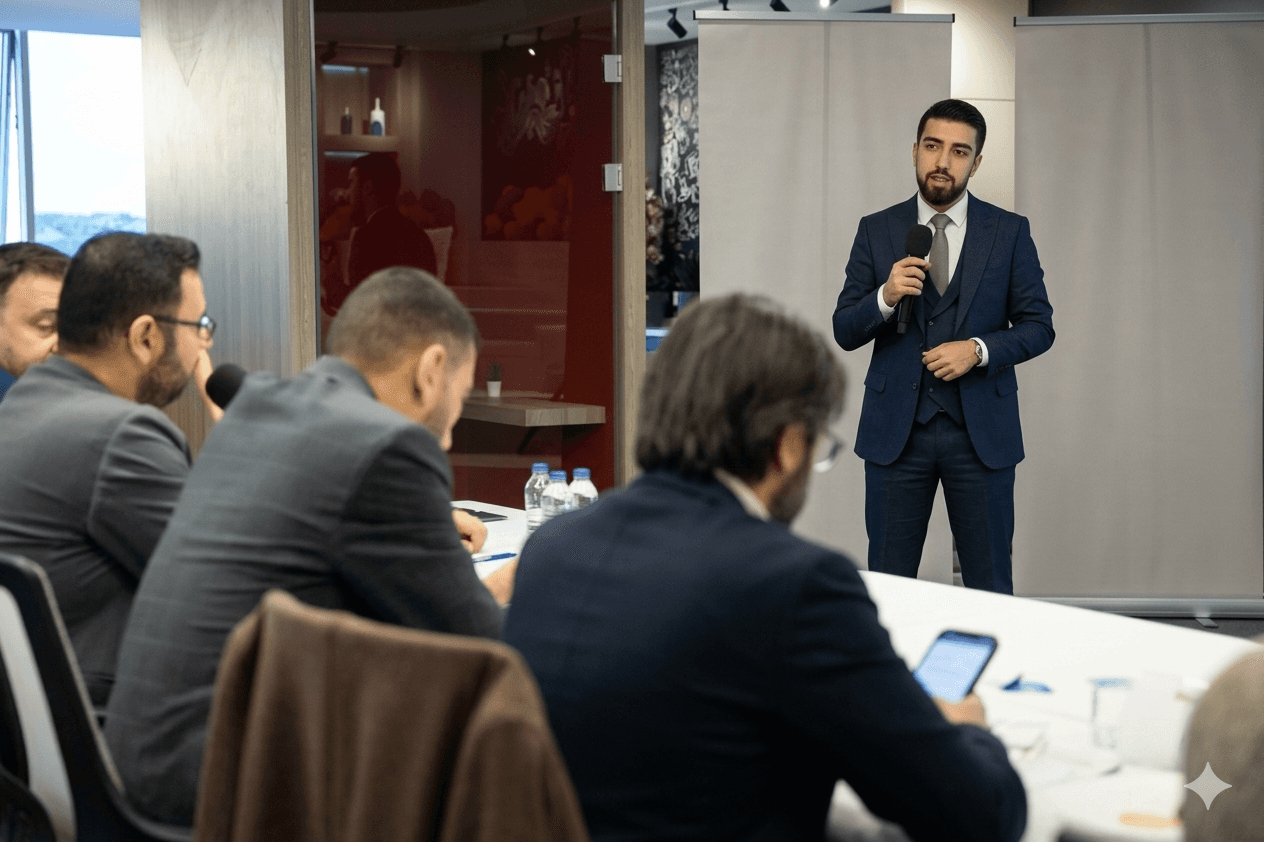
Dr. Ahmad Salaheddine, PhD in Marketing and Strategic Marketing Consultant, has over a decade of experience guiding NGOs, startups, and SMEs across five countries. Awarded Best Partner in the Middle East 2025, Ahmad helps organizations build marketing strategies that translate vision into measurable growth.
If your marketing feels busy but not effective, it’s time to shift from activity to strategy. Start by asking the right questions. Build the right system. make every action count. And And schedule a consultation to turn engagement into sustainable results.